
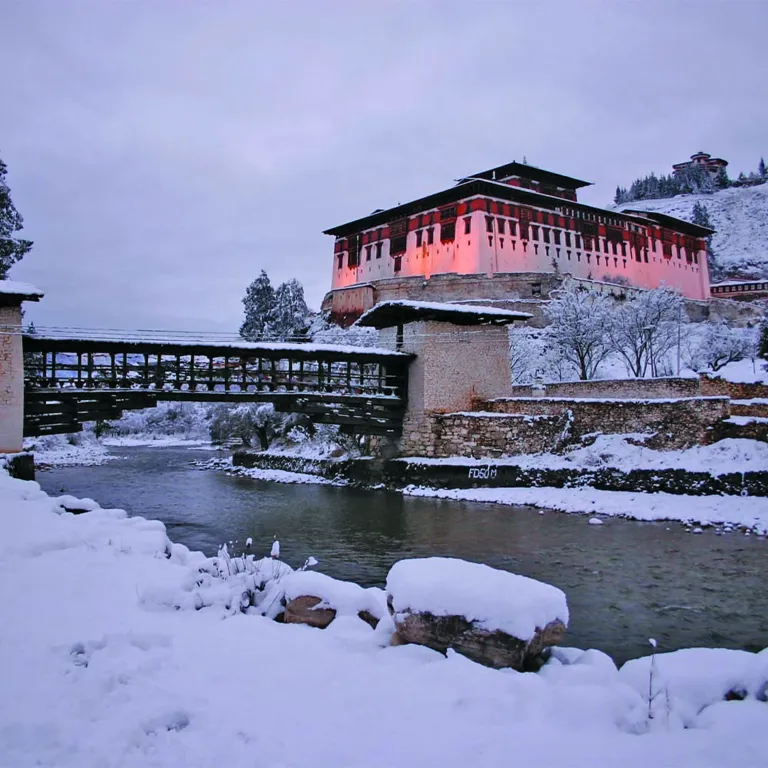
Gasa
Bhutan's northernmost district: Gasa Dzong, the Gasa hot springs, and the gateway to Laya and the high treks of Jigme Dorji National Park.
Overview
Gasa lies north of Punakha, up the Mo Chhu valley towards the Tibetan border. Most of the district lies within Jigme Dorji National Park, and it is the starting point for some of the most demanding treks in the Himalaya, including the Laya and Snowman routes.
Gasa Dzong was built in the 17th century by Zhabdrung Ngawang Namgyal to defend against invasions from the north. Below it, the Gasa hot springs are one of the most popular thermal baths in Bhutan.
Places to visit in Gasa
- Gasa Dzong
- A 17th-century fortress built by Zhabdrung Ngawang Namgyal to guard the northern frontier.
- Gasa Tshachu (hot springs)
- Natural hot springs beside the Mo Chhu, visited by Bhutanese families for their healing properties.
- Jigme Dorji National Park
- The protected area that covers most of the district, from subtropical forest to glaciers.
Things to do in Gasa
- Soak in the Gasa hot springs
- Visit Gasa Dzong
- Start a trek to Laya or into Jigme Dorji National Park
Best time to visit
Spring and autumn are the trekking seasons in Gasa. The Gasa Tshechu is held at the dzong, and the Royal Highland Festival takes place in Laya each October.
How to get there
A narrow road runs north from Punakha to Gasa. Beyond Gasa the road continues towards Laya, with the final stretch on foot.
Travel tips
- Roads in Gasa can be affected by landslides in the monsoon; your guide will check conditions before you travel
Festivals in Gasa
- Gasa Tshechu
More in Western Bhutan
Plan a journey that includes Gasa
Tell us your dates and interests. We will suggest a route and how many days to spend in each valley.