Overview
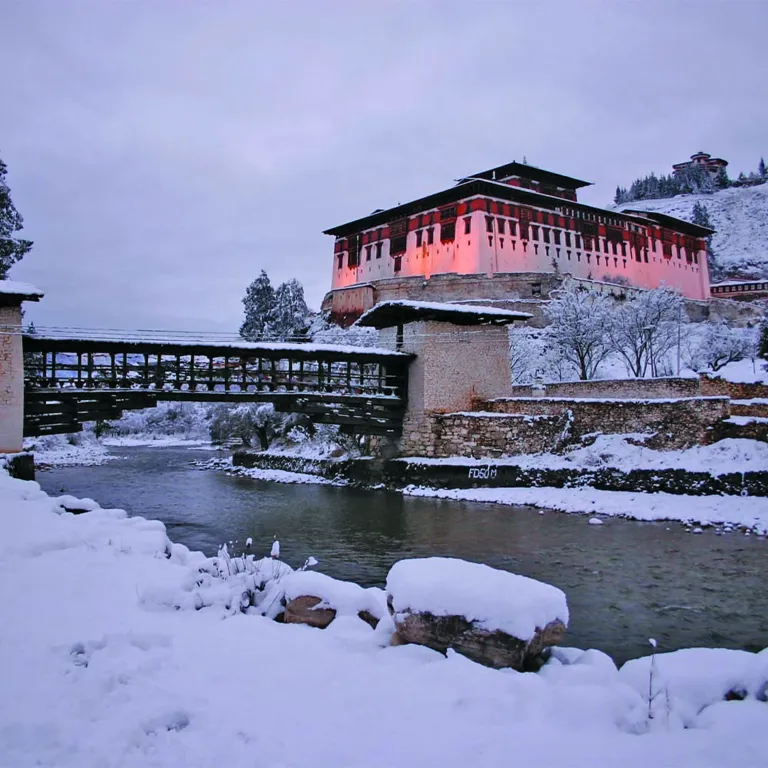
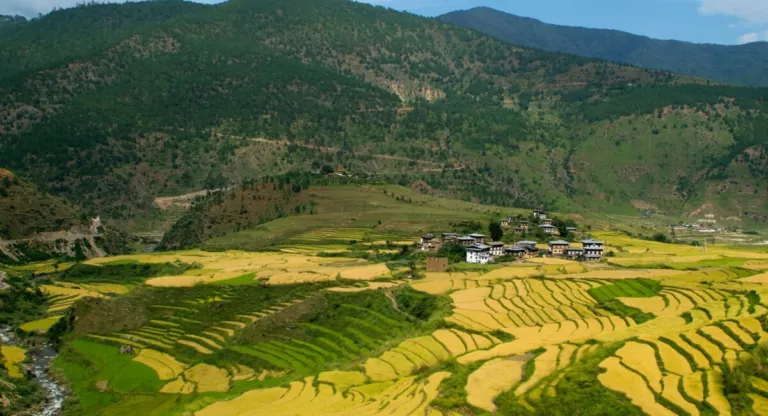
Wangdue Phodrang lies just south of Punakha, where the Punatsang Chhu flows out of the valley towards the south. Its dzong, founded in 1638 by Zhabdrung Ngawang Namgyal, commanded the routes linking east and west Bhutan.
In 2012 a fire destroyed much of the dzong. It was rebuilt on royal command using traditional methods, with modern fire and earthquake protection, and consecrated in November 2022. The district also includes the Phobjikha valley and the villages of the Black Mountains.
Places to visit in Wangdue Phodrang
- Wangdue Phodrang Dzong
- Founded in 1638 on a ridge above the confluence of the rivers, rebuilt after the 2012 fire and consecrated in 2022.
- Rinchengang village
- A compact village of traditional houses on the hillside facing the dzong.
- Phobjikha valley
- The glacial valley of Gangtey Monastery and the wintering black-necked cranes, within the district.
Things to do in Wangdue Phodrang
- Visit the rebuilt Wangdue Phodrang Dzong
- Walk through Rinchengang, a clustered village of traditional houses across the river
- Combine with Punakha and the Phobjikha valley
Journeys that visit Wangdue Phodrang
13 days, 12 nightsCentral Bhutan, Eastern Bhutan, Western Bhutan
The whole country in one journey: from Paro and Tiger's Nest through Punakha, Phobjikha and Bumthang to the dzongs, temples and weaving villages of eastern Bhutan, leaving by road into India.
USD 3,600 per person
Best time to visit
Spring and autumn are the most comfortable seasons. The Wangdue Tshechu is held in the dzong courtyard in autumn. Like Punakha, the valley floor is mild in winter.
How to get there
Wangdue Phodrang town is a short drive south of Punakha. The main east-west road continues from here towards Phobjikha and Trongsa.
Travel tips
- The dzong is an active administrative and monastic building: dress modestly and follow your guide on where photography is allowed