
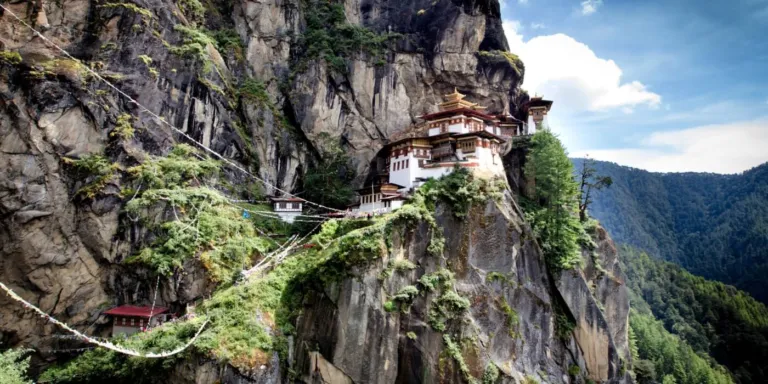
7-Day Bhutan Cultural Tour
Paro, Thimphu and Punakha in one week: the capital's dzongs, the Dochula pass, Punakha Dzong at the meeting of two rivers, and the hike to Tiger's Nest.
USD 1,800
Bhutan's capital: the seat of government at Tashichho Dzong, Buddha Dordenma above the city, and the country's main museums and markets.
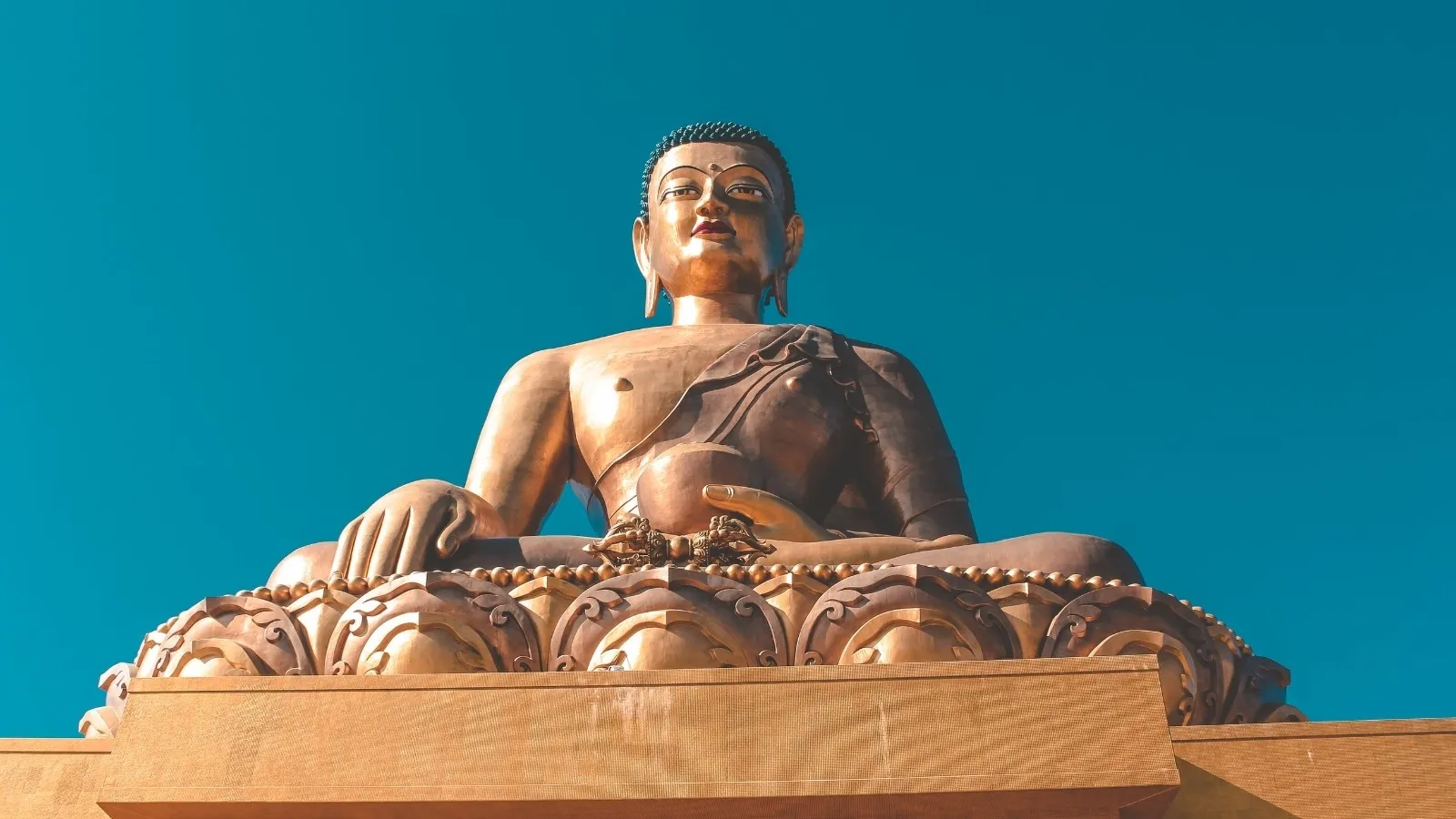
Thimphu is a small capital that still feels rooted in tradition. Government offices sit inside Tashichho Dzong, people walk their daily circuits around the National Memorial Chorten, and a police officer directs traffic at the main junction instead of traffic lights.
Most journeys spend a day or two here, visiting the city’s museums, temples and markets and the giant Buddha Dordenma that looks down on the valley.
Paro, Thimphu and Punakha in one week: the capital's dzongs, the Dochula pass, Punakha Dzong at the meeting of two rivers, and the hike to Tiger's Nest.
USD 1,800
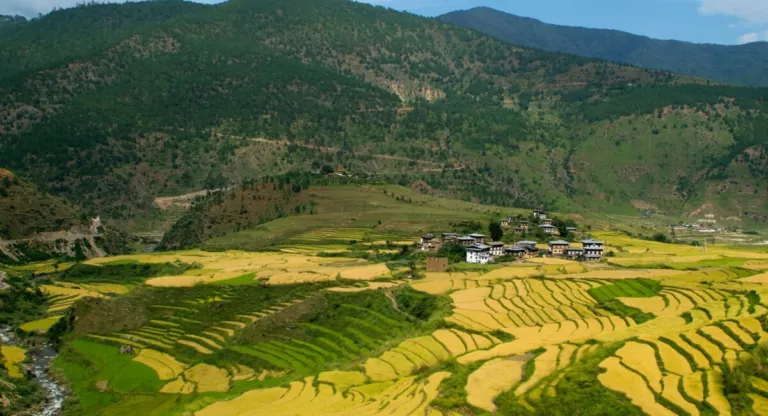
The essentials of western Bhutan in five days: Thimphu, Punakha Dzong and Chimi Lhakhang, and the hike to Tiger's Nest in Paro.
USD 1,200
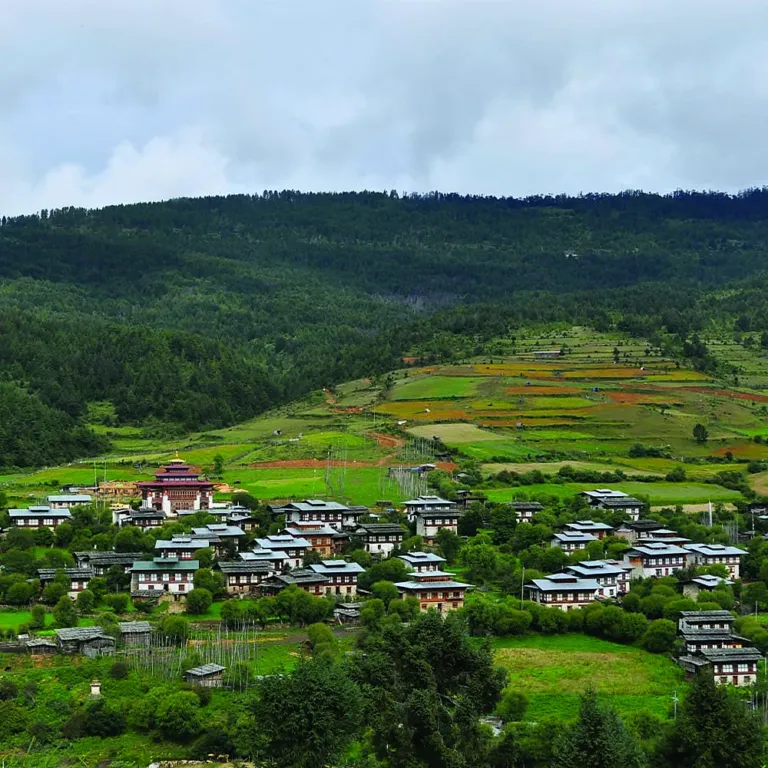
Beyond the western valleys to Phobjikha's glacial valley and the temples of Bumthang, Bhutan's spiritual heartland, with Tiger's Nest to finish.
USD 2,700
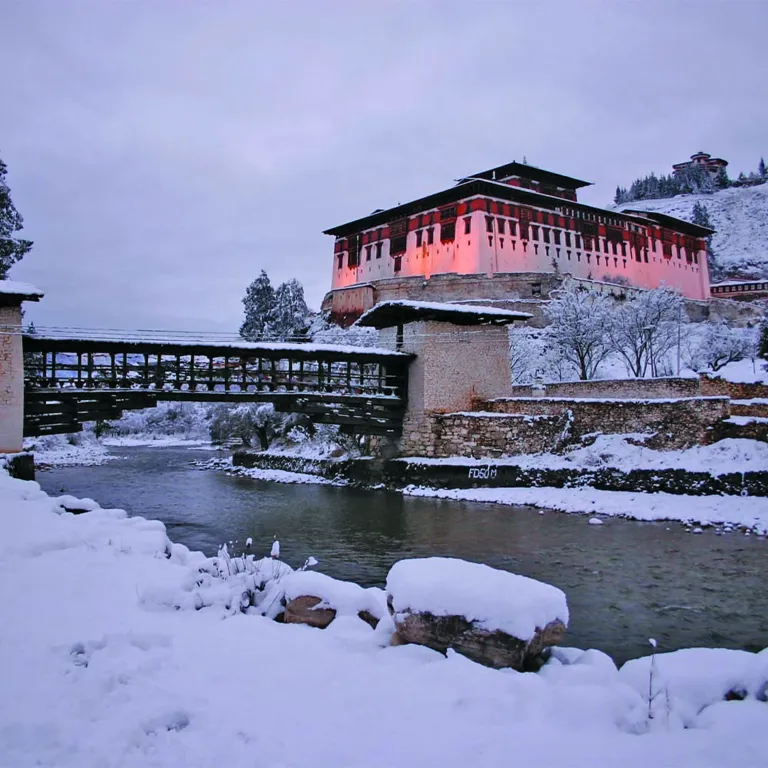
The whole country in one journey: from Paro and Tiger's Nest through Punakha, Phobjikha and Bumthang to the dzongs, temples and weaving villages of eastern Bhutan, leaving by road into India.
USD 3,600
Spring and autumn are the most pleasant seasons. The Thimphu Tshechu, one of the largest festivals in the country, is held at Tashichho Dzong in autumn. Winters are dry and cold, with clear days.
Thimphu is about 1.5 hours by road from Paro International Airport, along the Paro Chhu and Wang Chhu rivers.
Bhutan's national sport: long-distance matches with bamboo and modern bows, full of songs, dances and good-natured teasing.
Chillies as a vegetable, cheese in almost everything, red rice and butter tea: a guide to what you will eat in Bhutan and what to try.
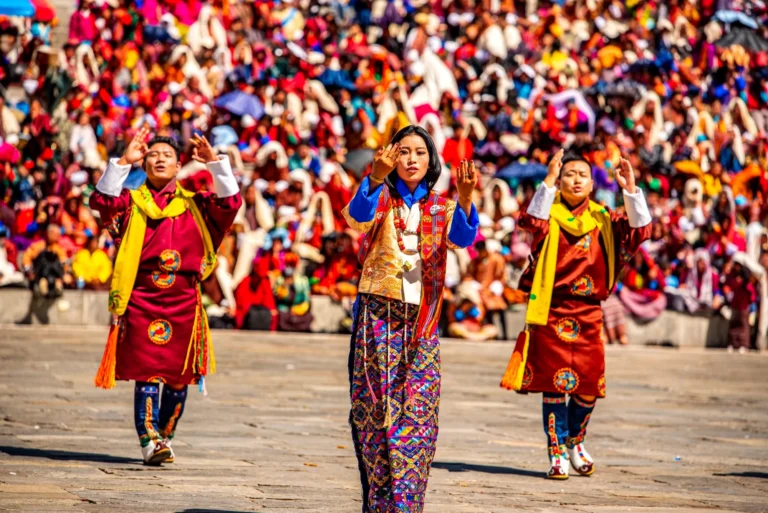
National dress, traditional arts, archery, festivals and a strong sense of identity: how Bhutan keeps its culture alive.
Takin, black-necked cranes, red pandas and more than 700 bird species, in a country where forests still cover most of the land.
Small, everyday moments that make a journey: a farmhouse visit, a village market, a cooking lesson or a walk with local people.
Tell us your dates and interests. We will suggest a route and how many days to spend in each valley.